
The Race
The core concept
The Pass of Tears - a test of horsemanship, sportsmanship and endurance like no other...
3 min read
The course
The course will be a loop of around 400kms, consisting of nine legs, some shorter, some ...
4 min read
Navigation
The course will not be marked. Riders will navigate from checkpoint to checkpoint using ...
1 min read
Environmental management
The event takes place in an exceedingly remote and spectacular natural ...
2 min read
Racing hours
Teams can only be moving during daylight hours of 7am to 7pm. All riders will wear a satellite tracker ...
1 min read
Veterinary checks
At each checkpoint, riders must present their horse, unsaddled, to the pres ...
2 min read
Veterinary record cards
Each rider will carry a record card documenting their horses’ ...
1 min read
Kit list
A detailed packing list will be made available to the selected riders, with specifications ...
1 min read
Weight limits
Horses are to carry no less than 75kgs, and no more than 100kgs...
1 min read
Re-supply opportunities
Each checkpoint will operate like a service station for horses, riders and crews. Horses...
2 min read
Team entries, placings and mutual assistance
Team entries of two are supported ...
2 min read
Emergency assistance
The race is designed to be a thrilling adventure and a meaningful contest...
5 min read
Race hold or abandonment
There could be certain weather events that precipitate a total ...
1 min read
Penalty Summary and core rules
The core principles of the event are straightforward...
1 min read
Pre-race training
Upon transfer to the start line there will be a series of trainings and briefings to help ride...
1 min read
Rider selection, horse selection - “the draft”
The Pass of Tears is a richer event thanks to the unique way ...
1 min read
Providing your own horses
It is possible to bring your own horse to race. You may ...
1 min read
Bring your A-game: horsemanship, survival, and respect will decide your fate.
This race demands everything. Rise to it, trust your skill, and leave your mark on Patagonia.
The core concept
The Pass of Tears – a test of horsemanship, sportsmanship and endurance like no other.
10 days to cover 400kms of wildest Patagonia, with a team of two horses, a GPS and your own survival nous and equipment.
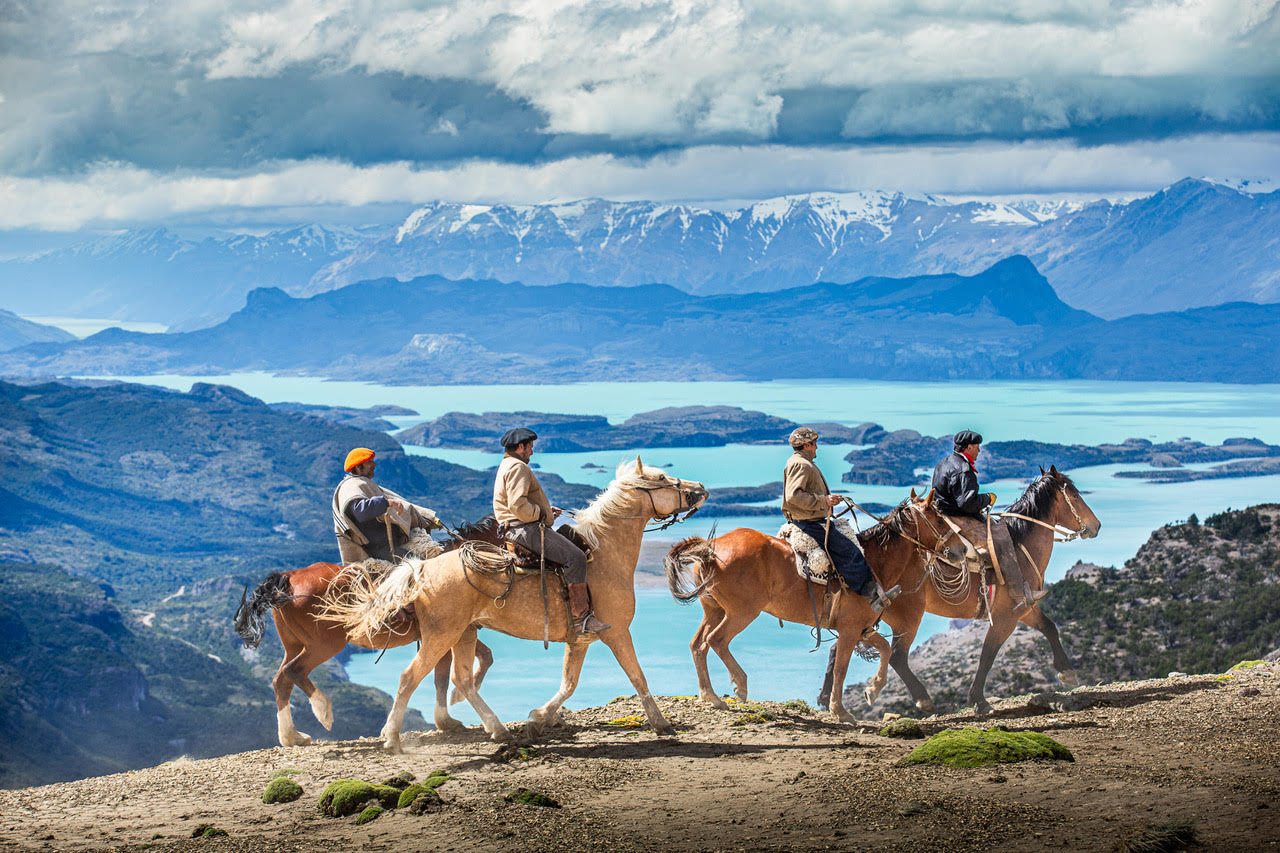
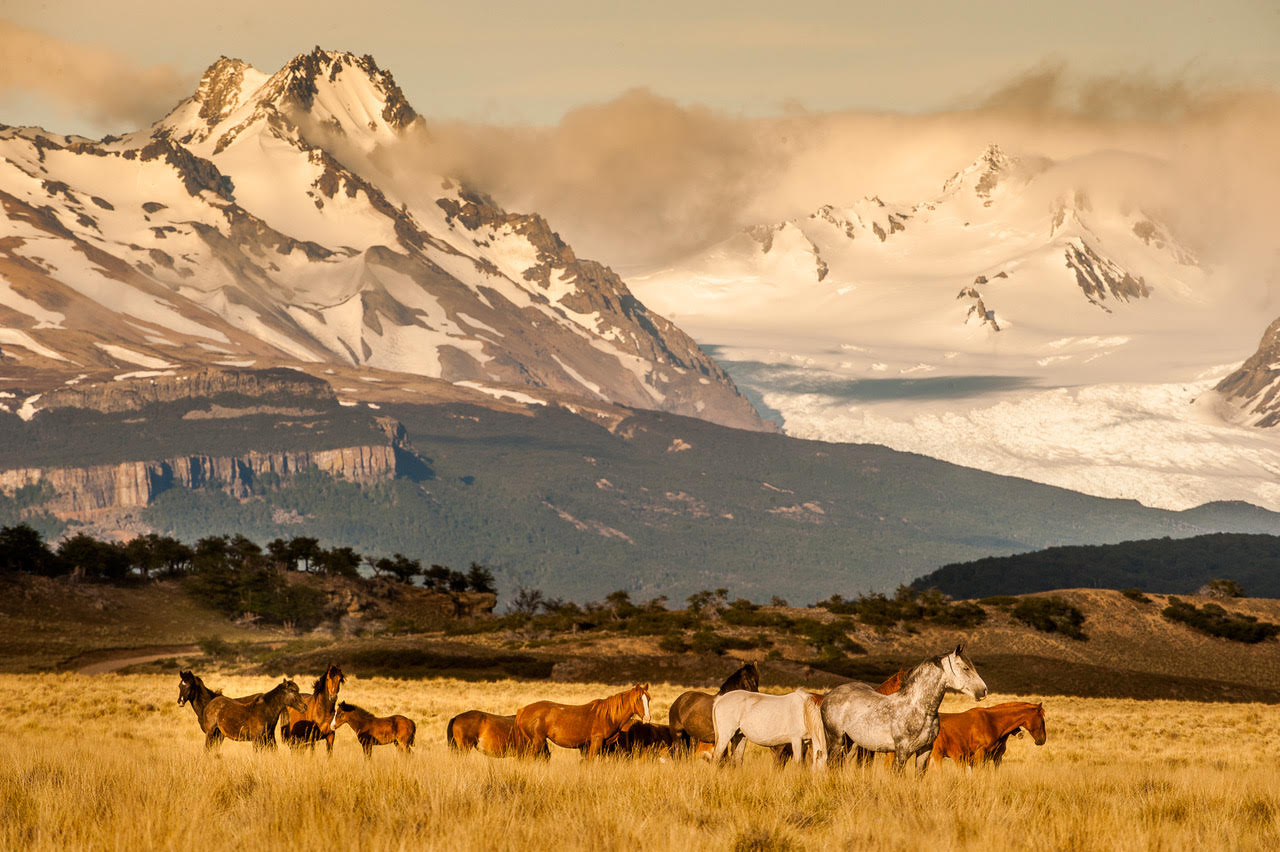
The race is a true celebration and showcase of the remarkable horses of the region. If you enter, it is with humility and respect for the animal and the local owners who have prepared and presented their horses for the event. Rather than drawing for a horse which is ‘just a number’, we will bring the horses and your horsemanship into the centre of the race, and the event concept. With a team of just two horses to cover the 9 exacting legs of the course, you’ll rely on them for their speed, stamina and strength, and they on you for your care and skill as a rider, navigator and competitor. With each of your steeds completing multiple sequential legs, being ‘fit to continue’ is not simply a matter of remaining competitive and penalty-free, but of being able to continue the race at all. More a case of “ride it like your life depends on it”, than “ride it like you stole it”.
A talented and committed cadre of vets, medics and event professionals will be staffing the course checkpoints, (and the airwaves and data centres when you are truly out of sight in some of the world’s remotest terrain), to ensure the welfare of the horses and the integrity of the competition. In an emergency, a sophisticated network of backup will be deployed to come to your aid, wherever you happen to be.
Outside of emergency situations, you will be navigating independently, camping or overnighting wherever you happen to be at the end of racing hours, and taking care of you and your equine partners so that you are always fit to continue.
The horses have been entered into the Pass of Tears by owners who stand to win a significant prize pot if you pilot them to victory. They will be heavily invested in preparing their horses to perform for you, and you will need to be heavily invested in courting those owners to win the ride on their precious mounts. Should you be the chosen jockey for the winning owner, you will win your horses as your prize at the event’s conclusion, and so be in a position to be a winning owner next year…or even an inaugural owner-rider.
There will be a formal rider selection during the pre-race proceedings. Your entry fee assures you two horses. As for which two that’s a function of your value as a jockey in the eyes of our owners. As in Formula 1, the teams are not uniform – as long as every horse carries between 75kg and 100kg (tack plus gear plus rider), it’s open weights; you can enter solo or team up with another rider formally (in which case you’ll both ride for the same owner); the horses are as varied as you’d expect to see in an FEI jumping or dressage event, so not all horses will suit all riders. With so many moving parts, and a backdrop as mercurial and majestic as the Perito Moreno National Park, a lot of luck will be needed to be the winner, and one thing is certain – you’ll need to bring your A-game as a horseman to get the most out of this event and make your own luck.
The course
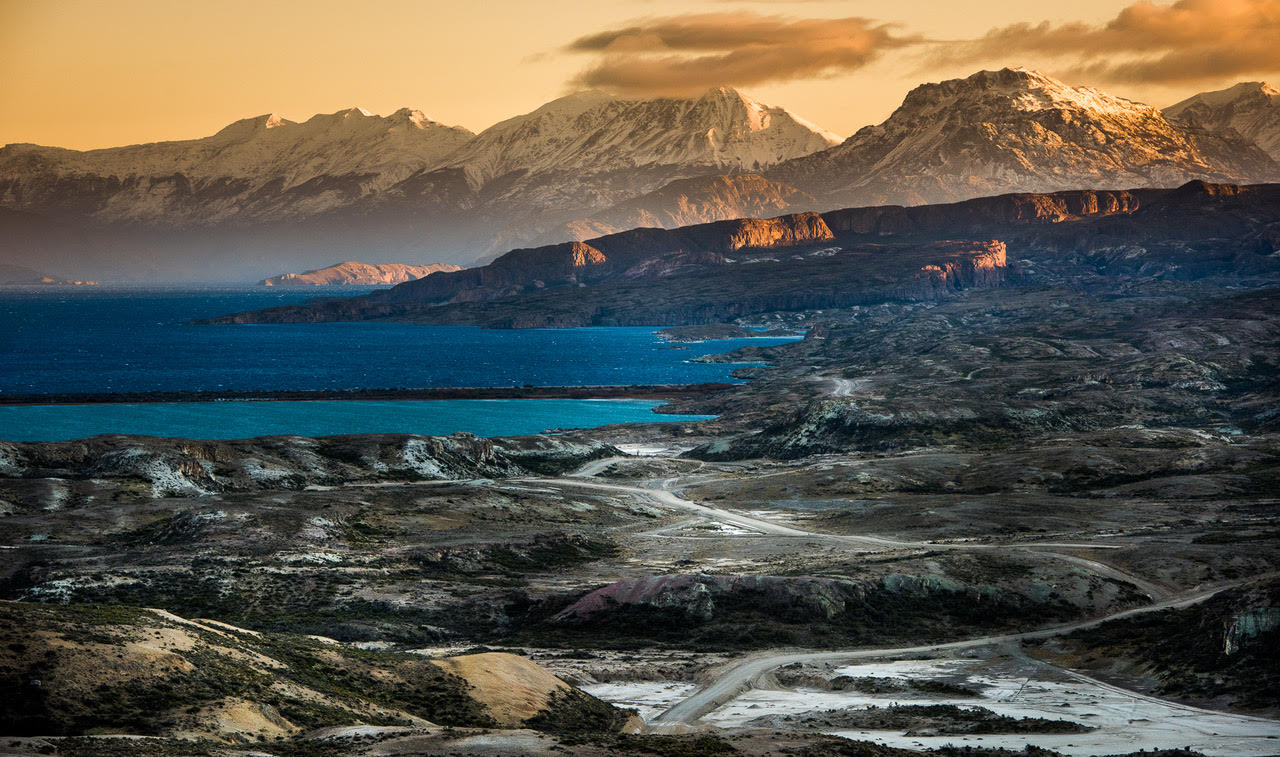
The course will be a loop of around 400kms, consisting of nine legs, some shorter, some longer.
Riders will have ten days to complete the course. Starting and finishing at Menelik on the north eastern fringe of the course, riders will tackle the first three stages on their start line mount. The middle four legs, checkpoints 3 to 7, will be with their second horse, delivered to station 3. First horses will then be transferred the short hop east to station 7 to resume their duties, and riders will cross the line with both horses.
A limited number of spare horses will be available, supplied by the organisers, in the event of horses being deemed not fit to continue and retired from the race. In the northern section of the course these spare horses will be mobile and delivered by trailer as needed to the appropriate checkpoint. In the southern half of the course they will be stationed at the furthest checkpoint and static.
Riders must navigate from checkpoint to checkpoint independently, and pass a vet check at each one, in order to complete the race. The winner is the first past the post. Any time penalties incurred will be served where they are issued, meaning that the finish order is the true result of the race, except in the case of penalties issued on the finish line. They will need to carry their own supplies for all food and survival needs. Re-supply will be possible at multiple checkpoints – riders will be able to send certain survival rations forward up the course to meet them later in the race and minimise weight carried on the horses early in the event.
The vet checks at the checkpoints are designed to ensure that the horses are fit to continue the event, that they are adequately comfortable, hydrated, fed and sound, and being ridden responsibly and cared for appropriately by their riders. They are not designed to have a tactical impact but to ensure high standards of horsemanship on the event, when much of the riding and husbandry takes places out of sight and supervision of the organisers. Riders are strongly incentivised to treat their horses as their most important piece of equipment. Penalties may be issued in the form of time added to compulsory holds if a horse is deemed to be compromised by its rider on the event. Abusive or neglectful behaviour witnessed on the course by any event staff or other riders will result in elimination.
In the event of medical, logistical or veterinary mis-hap, where no penalty has been incurred but assistance is required from the organisers to the competitors, the clock keeps running. Time lost to catching a loose horse, shoeing a horse, receiving medical attention or recovering lost equipment shall not be ‘credited’ – they are, in effect, their own penalty. The more self-sufficient, physically resilient and well-prepared the team, the more competitive they will be.
Navigation
The course will not be marked. Riders will navigate from checkpoint to checkpoint using a GPS or navigation device of their choice with the course waypoints downloaded.
The course will be made available to entered competitors immediately prior to the event by the organisers, and may be edited for reasons of safety or logistical need at any point prior to the event.
Knowledge of the region, or prior access to course data, will not unduly advantage any competitor. Navigation is not intended to be a material part of the skills required to successfully and safely complete the course. Sufficient waypoints will be included in the course file to ensure that serious hazards are avoided, suitable water sources and camping NAVIGATION entry points to key course nodes, such as safe river crossings, accessible passes and saddles, routes across hostile terrain, entries and exits to thick scrub, passes or forested areas which would otherwise be navigated ‘blind’, are provided.
As long as riders have facility with their GPS or navigation aid, and sufficient battery power to keep it running, they should not lose time to being lost or off course. That said, experience riding or hiking across challenging country and navigating by line of sight will be a key skill in the race. If you have no clue when you have covered a kilometre, at a walk, a trot and a canter, you may find measuring out 40km – or even 400km – a very stressful challenge.
Environmental management
The event takes place in an exceedingly remote and spectacular natural arena, and much of the course is national park. As such, it is imperative to be good guests.
No fires can be lit except at the checkpoints. No littering will be tolerated. Anything you carry away from the checkpoint, you must carry into the following checkpoint, where the organisers will have some limited waste disposal facilities. Used batteries, sanitary items, landfill, loo roll must all be bagged up into ziplock bags and carried to the check point.
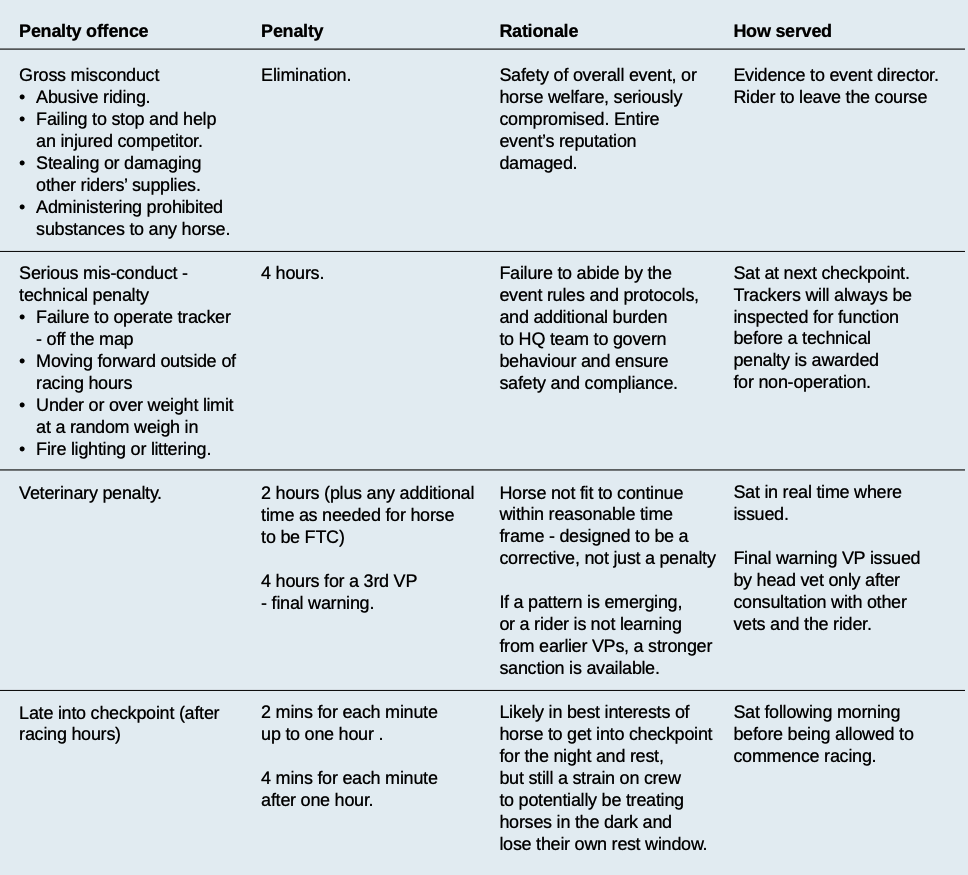
A technical penalty of 4 hours will be awarded for anyone found to be contravening these rules.
Racing hours
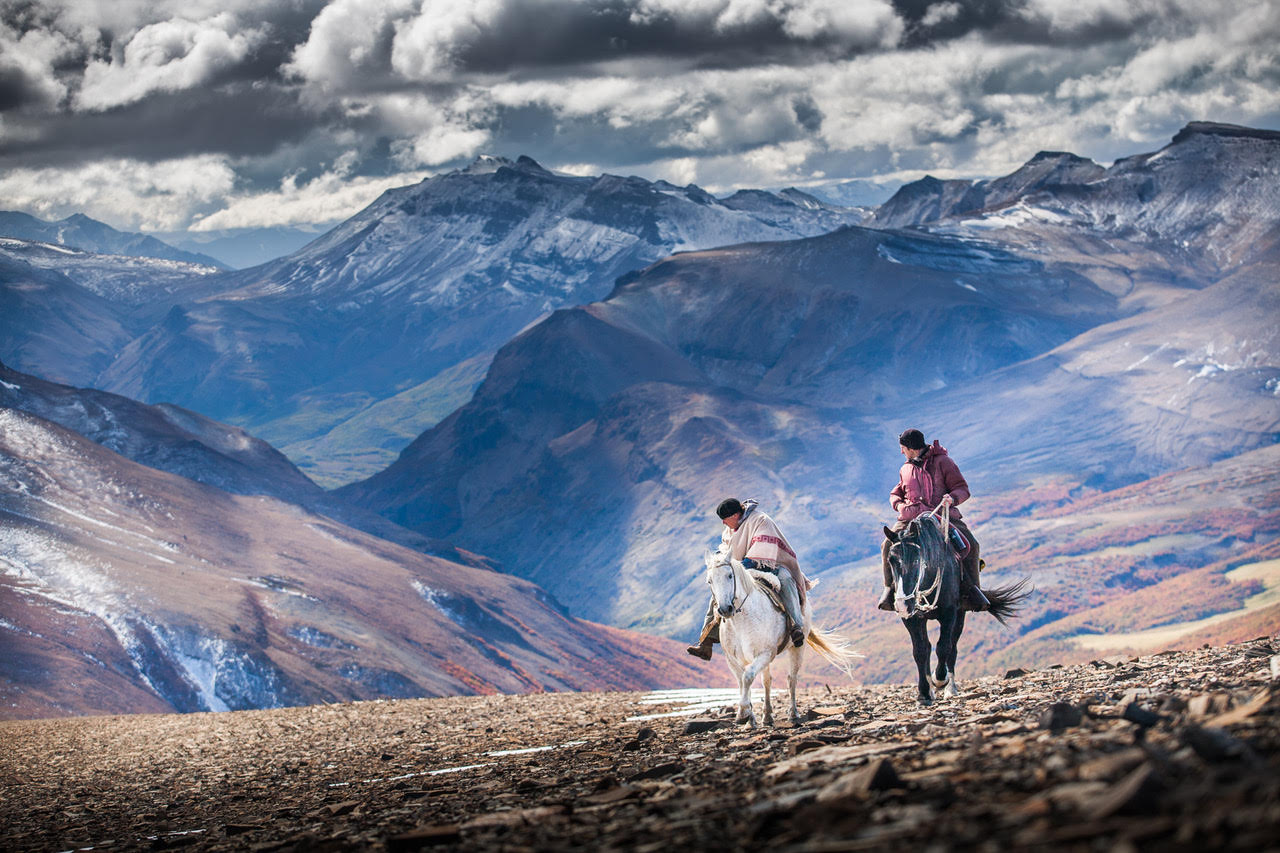
Teams can only be moving during daylight hours of 7am to 7pm
All riders will wear a satellite tracker and their movements will be monitored to ensure the fairness of the competition, the welfare of the horses, and the safety of crews and competitors.
Riders seen to be moving outside of racing hours will be heavily penalised. Crew cannot be expected to operate around the clock and the event cannot run without proper rest intervals for all parties. Hence contravening the racing hours will be strongly penalised, for the safety of all.
Riders arriving late into a checkpoint will lose 2 minutes for every minute past 7pm, to be sat the following morning when racing resumes again. If more than 60 minutes late, the penalty will double again to 4 minutes for every minute.
E.g. 7.30pm arrival – 30x 2 minute penalty = 60 minutes added on.
8am departure 8.10pm arrival – 60x 2 minute + 10x 4 minute penalty = 120+40 minutes added on. 9.40am departure
Any rider who appears from the tracking data to have moved forward outside of racing hours whilst camping will be penalised 4 hours, subject to a steward’s enquiry, upon arrival at the next checkpoint. Failure to operate the tracker correctly, or switch it on and report before riding off, shall not be a defence in this scenario. Riders will be instructed on the correct operation and expected protocols for using the tracker, and it is their responsibility to show that they have not advanced their position outside of racing hours.
Veterinary checks and checkpoints
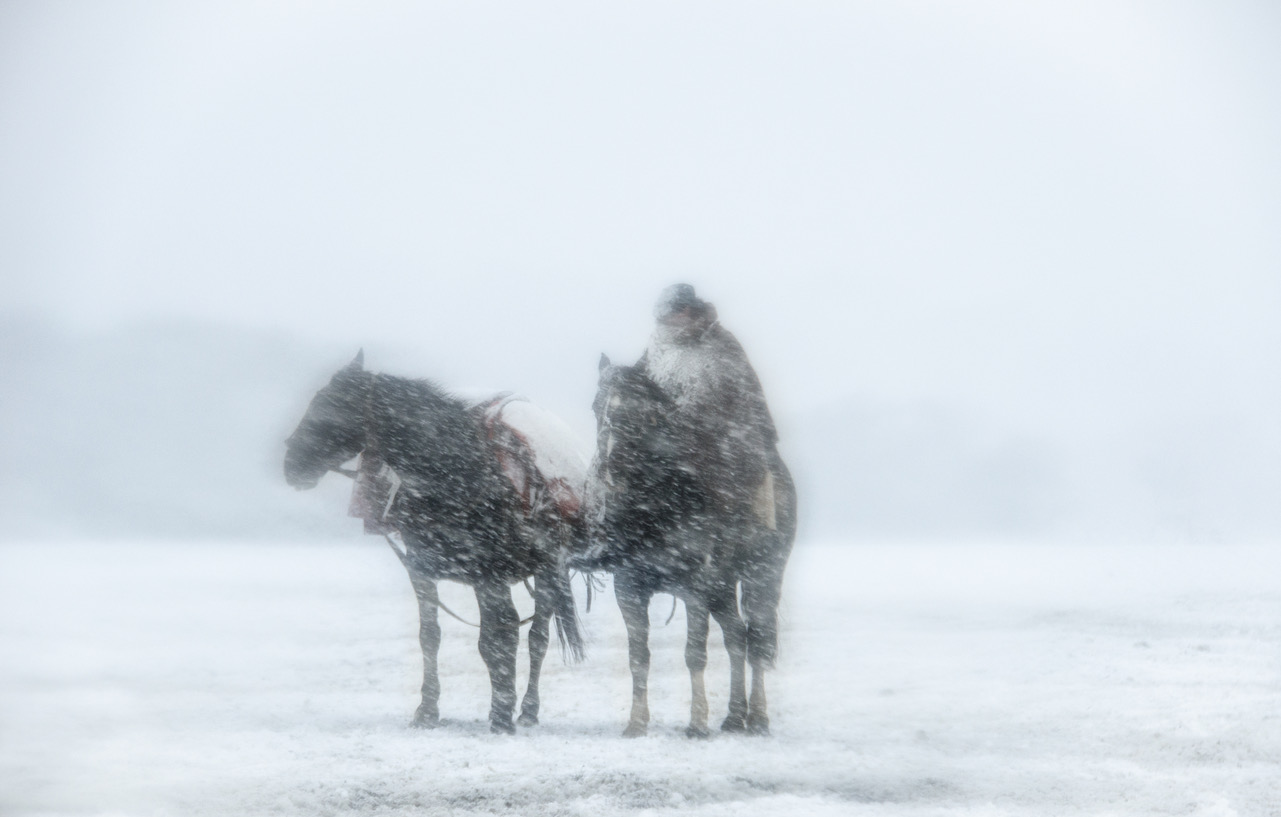
At each checkpoint, riders must present their horse, unsaddled, to the presiding vet team and have the horse deemed fit to continue, based on pulse, metabolic health and soundness.
Having passed the initial vet check there will be a compulsory hold of 40 minutes, during which time the horse will be fed and watered. Then there will be a re-present trot-up to ensure the horse remains sound after the resting period, before the horse and rider can resume the race. In total a successful veterinary checkpoint will take around an hour. Riders may stay at the checkpoints as long as they like however.
The horse’s heart rate must return to 64 beats per minute in order to pass the vet – as soon as the rider is confident that their horse is at a suitable resting pulse they will be able to ask for a veterinary examination. During this time the clock keeps running. Riders have 30 minutes from arrival at the checkpoint to make first presentation to the vet. Should the horse’s pulse still be elevated 30 minutes after arrival at the checkpoint, the horse will be deemed to have failed the vet. Riders can make multiple presentations to the vet during the initial 30 minutes, for no penalty. Priority will be given to first presentations, over re-presentations, at all times. Riders are strongly incentivised to bring their horses in to the checkpoints ready to present to the vets – not blowing hard. Once the horse’s pulse is 64 or less, the horse will be trotted up and examined to check overall health.
Horses may fail the vet based on a high pulse, lameness, dehydration, poor gut sounds, injuries or abrasions that will worsen with further work under saddle. A horse may vet in sound and present lame after 40 minutes at rest, in which case it will not be deemed fit to continue. Horses will be under close veterinary care and scrutiny for around an hour, at least, at the checkpoints, and riders will be expected to be in charge of their horse’s welfare and recovery for the duration, and to work with the vet teams however necessary to support and facilitate their recovery and wellbeing.
A rider whose horse fails the vet will incur a 2 hour penalty, sat in real time at the checkpoint. Depending on the reason for the penalty, the horse may be retired from the race, undergo treatment from the vet in residence, or be declared fit to continue after additional rest and recovery time. Once the 2 hour penalty has been served, the vets retain the discretion to enforce a further hold on the horse and rider until such time as they are confident that they are fit to continue. This could consist of an overnight rest period and review before racing hours begin the following morning.
Should a horse incur a veterinary penalty for hydration or pulse, and recover well under veterinary supervision or an extended hold, it will not necessarily have to retire.
Any horse administered pain relief will be automatically retired.
Horses will be dope tested at random during the event to ensure that they are unmedicated. A rider found to have administered any controlled substance to their horse will be eliminated.
Veterinary record cards
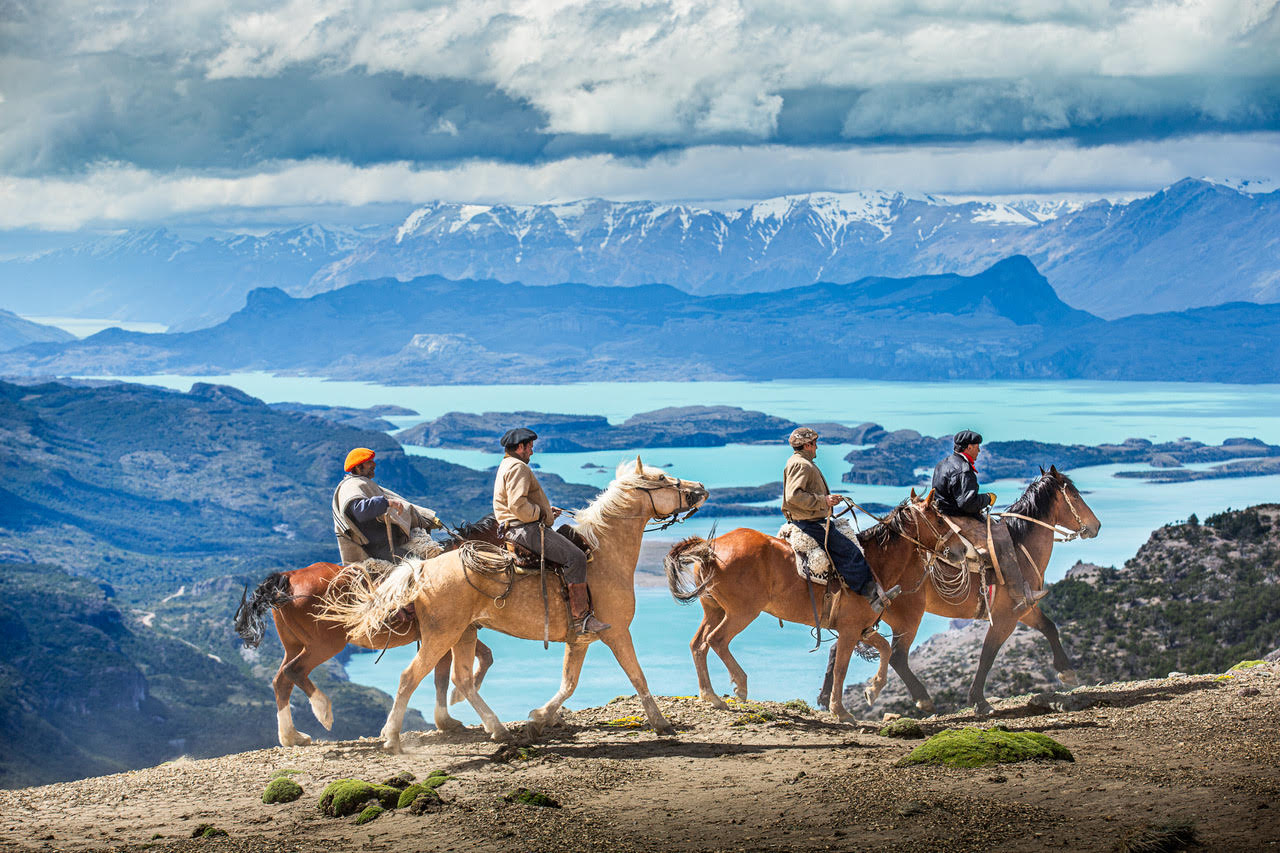
Each rider will carry a record card documenting their horses’ parameters at each checkpoint, and the times in and times out.
Vets will be able to liaise with the operations room monitoring the live tracking to get data on a rider’s speed over the leg just completed.
A penalty can be accumulated if a pattern of neglectful or abusive horsemanship emerges; a saddle sore that worsens; a second or third “only just” fit to continue; veterinary advice on horse management going unheeded.
This will operate like a ‘yellow card’/’red card’ system, so a rider could come into a checkpoint with a yellow sticker on their vet card from the previous vet, and a brief description of the issues to be particularly vigilant of. Where horses are running multiple sequential legs this will be vital in the pro-active management of any health issues.
Horses retiring – Spare horses
Spare horses shall be available along the course in the event of any horses needing to retire.
A rider can still complete the event and compete on the same basis on a spare horse. If a second horse on their team is retired a rider will be forced to retire. Only one substitution per rider is allowed. All substitutions are subject to availability, and not guaranteed.
Accidents happen and there will be circumstances in which through no fault of the rider, a horse is unable to continue the race and is retired.
Should your horse go lame out on the course, you will be expected to dismount and walk it in to the closest checkpoint if it’s mobile, or summon emergency help as shown during training if it’s severe, and if these protocols are followed, no penalty will be incurred. In a “no fault” substitution, a spare horse would be provided as soon as logistics allow, and the rider’s record card would remain blemish free, though in all likelihood, time will have passed sorting out your original horse and you will be required to remain with it and care for it for as long as it takes to get the horse to definitive care.
Kit List – What to bring, what is provided
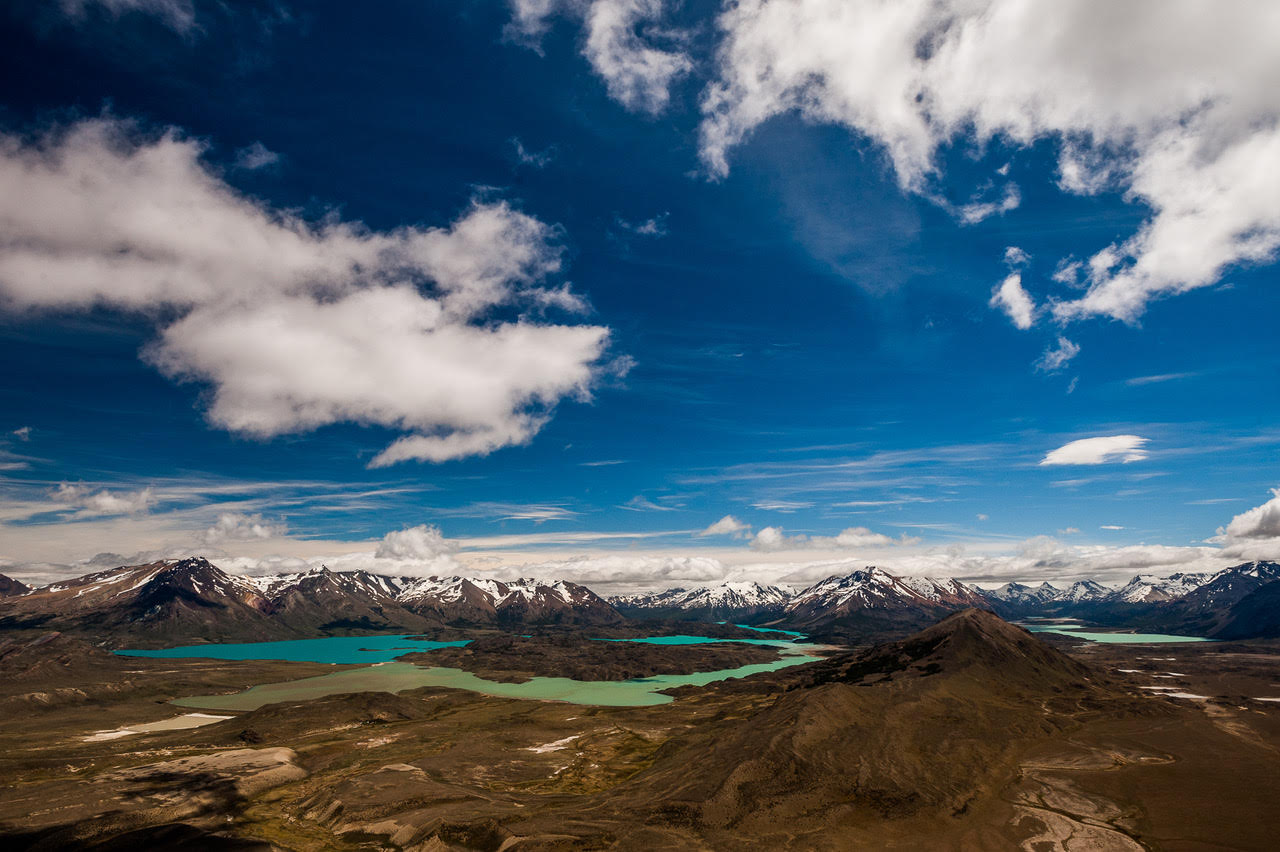
A detailed packing list will be made available to the selected riders, with specifications for survival gear, riding kit and navigation. Below is a summary only.
It is within the rules to enter on your own horses, with your own tack. However this is not expected, and where horses are entered by their local owners for an international rider to compete with, the horses shall wear their usual saddle for comfort and fit. You will need to bring a set of stirrups and leathers, and advice on compatible leathers will be made available to the selected riders in good time before the event.
Water is freely available all down the course save for one stretch over the Pass of Death, for which half a day’s water will need to be carried on the horses – consider 2 or 3 smaller water vessels in case of a puncture or damage to one, rather than a single large bottle or bladder. Water is clear and pure but should be purified for safety, and again this favours multiple smaller vessels over a single large volume of water, since most purification tabs take 30 minutes to be effective.
Compulsory
Tent, sleeping bag, navigation device and means of powering it, clothing, stirrups, riding helmet.
Optional/recommended
Food, sleep mat, multi-tool, personal medical kit and veterinary supplies, water purification, water container and spare, power banks, solar charger, spare batteries for GPS.
Provided
Satellite tracker, saddle and bridle, saddle bags, food for horses and riders at the checkpoints.
Weight limits
Horses are to carry no less than 75kgs, and no more than 100kgs
Riders will weigh out on the start line, carrying their saddle, saddle bags and their contents, stirrups, and self, dressed to ride. A rider who puts less than 75kgs on the scale will be required to add weight. A rider who puts more than 100kgs on the scale will be required to jettison weight.
There will be additional weigh-ins down the course at random intervals. If riders have been found to redistribute gear between them such that a rider is over or under the weight allowances, a technical penalty of 4 hours will be awarded. This is a fairness issue and to be strongly disincentivised. Ordinary weight loss or gain due to being wet or dry, hungry or thriving, is not a fairness issue and will not be subject to penalties.
Re-supply opportunities – The checkpoints and in between
Each checkpoint will operate like a service station for horses, riders and crews. Horses will undergo vet checks and compulsory rest periods.
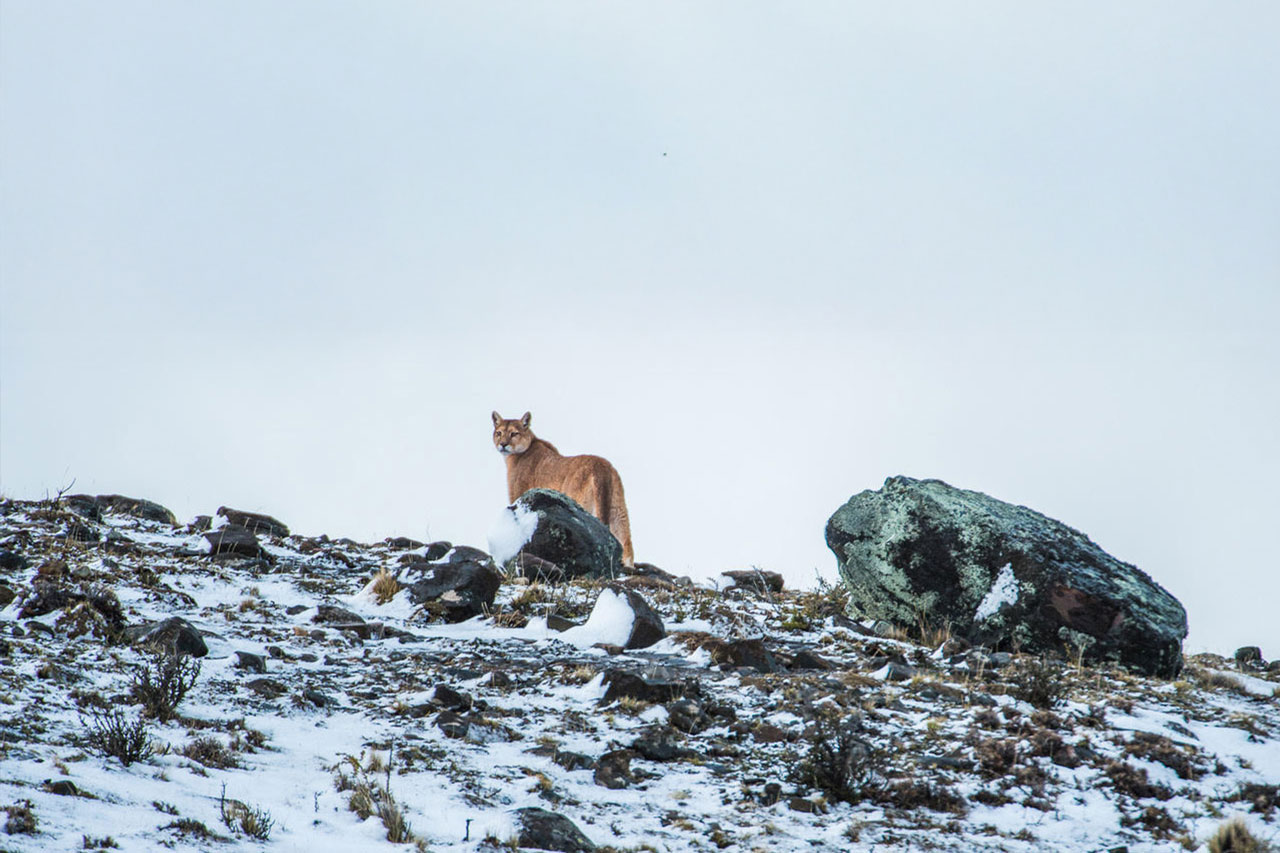
Farriers will be available in case of horses losing shoes or needing to be re-shod.
Riders and crew will be able to eat a substantial meal, and use facilities to make or cook their own if they have brought supplies.
Several of the checkpoints will have a barn, animal shed or rudimentary shelter which riders can make use of.
Power will be available at checkpoints 3-7 in the form of diesel generators. Competition for electricity will be intense and crew’s devices will take priority over riders’, so it’s recommended that you use power banks, batteries and solar chargers for all of your power needs.
In addition to the kit each rider elects to carry off the start line, you will have the chance to send forward re-supply parcels, from start line to checkpoints.
For each rider, 3x 10 litre dry sacs can be loaded and delivered to strategic checkpoints, with dry clothing, additional food, medications, batteries, power banks, any supplies that will be needed. The contents of your dry sacs are entirely discretionary.
The checkpoints at which re-supply bags will be delivered will be 3, 5 and 7; effectively the beginning, zenith and end of the (even more) remote southern loop, where the legs are longer and the assistance will be slower getting to you. Calories will be essential. Maybe some poetry, too.
In between the checkpoints, riders are expected to be entirely self-sufficient, for food, water, survival, navigation, health and horse health. There will be mutliple legs which cannot be completed in a single day, and hence riders are guaranteed to be camping wild overnight when they leave the checkpoint.
Team entries – Placings and mutual assistance
Team entries of two are supported within the rules, and the only way to enable a joint win or the race.
Where a team has entered, both riders will be mounted on horses provided by the same owner, meaning that should they win, the entire prize pot is awarded to their owner.
Teams of two may use their weight allowance between them, and share gear; for example, the lighter rider carries a two-man tent on their horse, and the heavier rider none. This is a tactical advantage. All supplies carried by riders may be pooled between a formal team of two; food, navigation aids, medical supplies and survival equipment.
Should one rider in the team have to retire, the remaining team member is at liberty to ride on as an individual, but the usual weight limits will apply. In the case of a heavyweight rider who cannot weigh in under 100kgs whilst carrying essential or compulsory items, they may be forced to retire, depending on where they are on the course. There are sections of the course which cannot be attempted without proper food and survival supplies as they cannot be completed in a single day. The self-sufficient rule will still apply in this case and the rider will not be allowed to ride on.
Informal assistance between competitors for mutual advantage, safety, enjoyment or companionship is also within the rules. In these circumstances, equipment may be shared, and horses swapped, although riders remain responsible for the horses they have been allocated throughout the event, and will always present their team of horses to the vets for inspections at the checkpoints. If you offer to carry equipment for someone else you are still liable for a penalty if you fail the weigh out, and you run the risk of losing your equipment if the team breaks down for any reason. If someone else has ridden your horse on the prior leg of the course and it fails the vet, you will be liable for the penalty.
No joint win is possible unless the team has been declared during the pre-race proceedings however, as only one owner can be the winner. Should riders cross the line first together, they will be placed according to which horse vets in successfully first. There can only be one winner Joint places will be accepted behind the winners.
Emergency assistance
The race is designed to be a thrilling adventure and a meaningful contest, meaning that people will be pushing themselves to their limits, physically and psychologically.
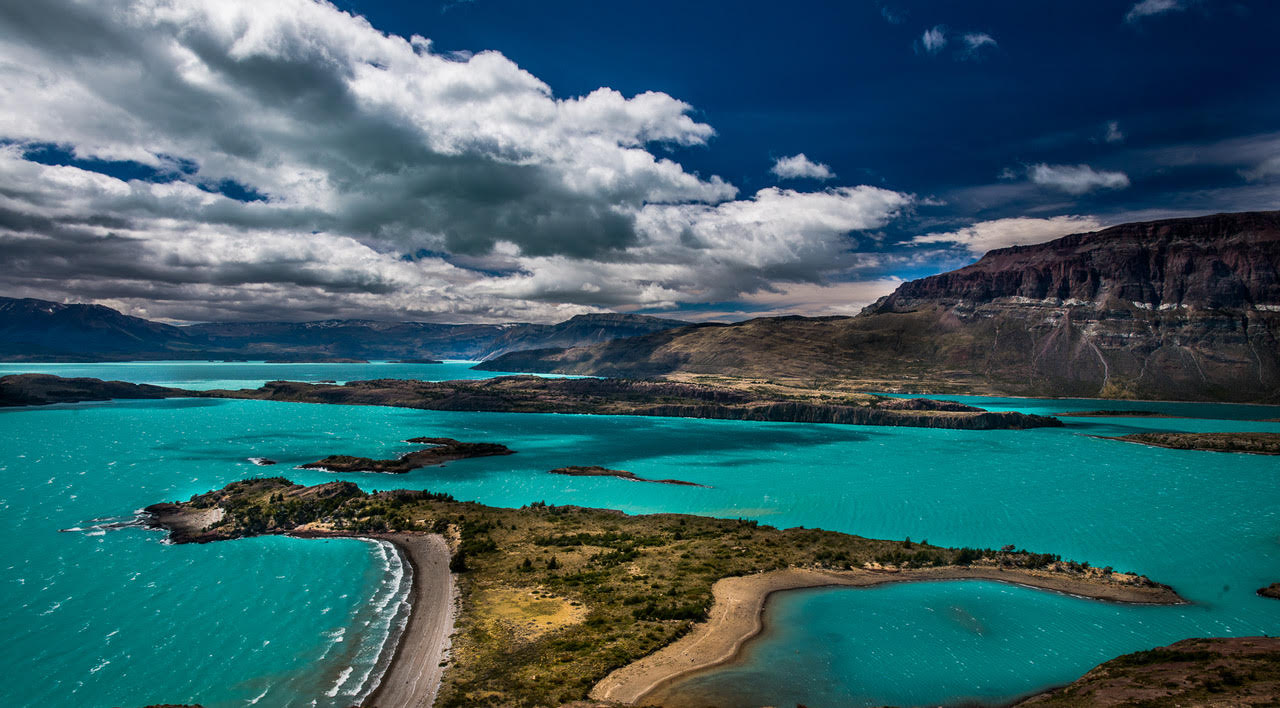
It takes place in an exceedingly remote location and there is considerable risk involved in riding horses across wild terrain and surviving independently for up to ten days. A sophisticated network of back up is deployed to mitigate these risks, of vets and medics in the field and a dedicated HQ co-ordinating the event and deploying assistance where it is needed.
Riders will all carry a satellite tracker, and receive training on its proper operation, which is the sole means by which the emergency assistance network can work effectively. Knowing where all riders are on the course, at all times, and having a clear communication protocol when back-up is warranted, allows the event team to send in help where it’s needed and allow the uninterrupted flow of the event at all other times. You will have the sensation of being ‘on your own’, except where you require the event’s resources.
Where you have summoned assistance in good faith, for your own or your horse’s safety or welfare, or for the sake of another rider or team should you come across them and they are unable to summon their own emergency assistance, such assistance will be freely given and no penalties will be incurred. The chances are that whatever has befallen you or your horse will be its own penalty. If you are in doubt about whether your situation is an emergency, treat it as an emergency.
The protocol for an emergency out on course will be to send the nearest vehicle and communications-enabled event team to the location. From there the appropriate team can be alerted and deployed and use direct communications with the rest of the event team to handle the emergency. All emergencies will be assumed to have a medical element until confirmed otherwise.
However if a vet team is closer, you may see a veterinary team before you see a medical team. In all cases, a medical team will be being prepared to deploy and move to your aid until it is stood down.
In many cases the nearest team will be a veterinary one, and the consequence of this will be that at times, a vet will be away from their checkpoint, managing the ordinary business of the race and taking care of the horses on their rest periods, and instead will be engaged in an emergency response. This will mean the checkpoint cannot function and riders will not be able to leave. That is to say, the ordinary flow of the race will be interrupted by the needs of the emergency.
All emergency summons will initiate the fastest and most comprehensive response possible, and the needs of the competition will be secondary to the emergency in all cases. All and any resources required by the emergency will be sucked in, for as long as is required. There may be emergencies that other riders only learn about at the event’s conclusion, which had no effect on their adventure or journey. There may be other emergencies which cause prolonged interruptions and even whole-field race holds. The safety of all and any horses and riders will take priority over the competitive aspects of the event.
Do not move once you have initiated an emergency response. Unless you are being chased, or your safety compromised by some other situation which makes moving inevitable, it’s better to remain static, as crews don’t need constant updating on your location.
There may be instances when direct communication is possible between a rider initiating an emergency response and the responders. If the event team can ascertain the nature of the emergency and tailor the response accordingly, this is to be encouraged. For simplicity, all emergency help requests and responses are to be managed using the satellite trackers in the first instance, so that correct records can be kept, and clear communication hierarchies maintained. Therefore, always use the SOS response on the tracker before attempting any other communication.
If a rider or team is seen to be static during racing hours, between checkpoints, for 90 minutes, this will be treated as an emergency. For this reason, having the device in tracking mode, and charged, so that a constant live track is fed to the event team and all riders are ‘on the map’, is to be strongly incentivised. If you fail to put your device in tracking mode, this shall be a technical penalty of 4 hours, to be served at the next checkpoint. This is both a safety issue and a fairness issue. It’s a resource sink trying to locate riders based on last known location and time, and interpolate their condition based on an absence. It opens up the possibility of ‘going dark’ and incrementally advancing your position outside of racing hours, or riding at a speed which would be considered reckless, or being outside of direct scrutiny from the event crews in a scenario where close supervision was intended or warranted. Stay on the map. It’s a rule, not a guideline.
You can summon outside assistance using the tracker for a vet, farrier, medic, assistance catching a horse if you have fallen off and been separated. If there is a serious issue, human or equine, that cannot wait until the following checkpoint, or you are not in a position to move backwards to the prior checkpoint if that is closer, and you are prepared to interrupt your race to a serious extent while we sort out whatever pickle you have found yourself in, then do not hesitate to summon assistance. In most cases, riders will self-help – to save time, to remain competitive, for the kudos when the dust settles. You will feel clearly and instinctively when it’s time to call in the big guns.
In the case of a serious medical incident, as soon as it has been identified as such, an evacuation to definitive medical care will be initiated. Depending on your location, time of day and condition this could be by road/ vehicle, or helicopter, and it could take many hours to complete, given the remoteness of the event. Our team of remote medics will be on hand to stabilise a casualty and co-ordinate the evacuation.
If you come across another rider down, and unable to operate their tracker, it’s imperative that you summon emergency assistance on their behalf. If possible use their device in the first instance so that the case is opened up for the right rider, but in any case, raise the alert. A rider found to have trotted over a fellow competitor in distress will be eliminated.
Race hold or abandonment
There could be certain weather events that precipitate a total abandonment of the event, for safety reasons.
The event organisers will keep a close watch on the weather throughout the event and staff at every check point will be informed if riders are free to continue or not. The protocol in a race abandonment situation will be to retrieve everyone to the nearest checkpoint and hold them until all can be safely evacuated. Some checkpoints will have more facilities for a longer hold, so any riders, horses and crew at the remotest southern checkpoints will be the priority for swift evacuation.
The satellite trackers are enabled for two way communications, meaning that if a rider is on the course when the call is made to abandon RACE HOLD OR ABANDONMENT the race for any reason, this can be communicated in real time.
Riders will be advised to proceed to the nearest checkpoint (ahead or behind) where the will be held, or retrieved to a further holding point as appropriate.
A re-start of the event after a storm or other serious incident is possible, though it is likely that the possibility of completing the whole course will be impacted by a multi-day race hold. It may be that a mass re-start would be attempted from a checkpoint closer to the finish line, or set off at intervals to replicate the last known positions of teams on the course. Live tracking data will be used to determine rider placings.
Penalty summary and core rules
The core principles of the event are straightforward:
A fair contest, conducted in a sportsmanlike fashion You cannot win by flouting racing hours or playing for unfair advantage.
Horse welfare to be safeguarded vigorously You cannot win by pushing the horses too hard.
You’re On Your Own No non-emergency assistance is available from the organisers to the competitors once you are off the start line. The whole principle is to be self-reliant and responsible for yourself and your team of horses.
Pre-race training
Upon transfer to the start line there will be a series of trainings and briefings to help riders prepare for the launch and the race.
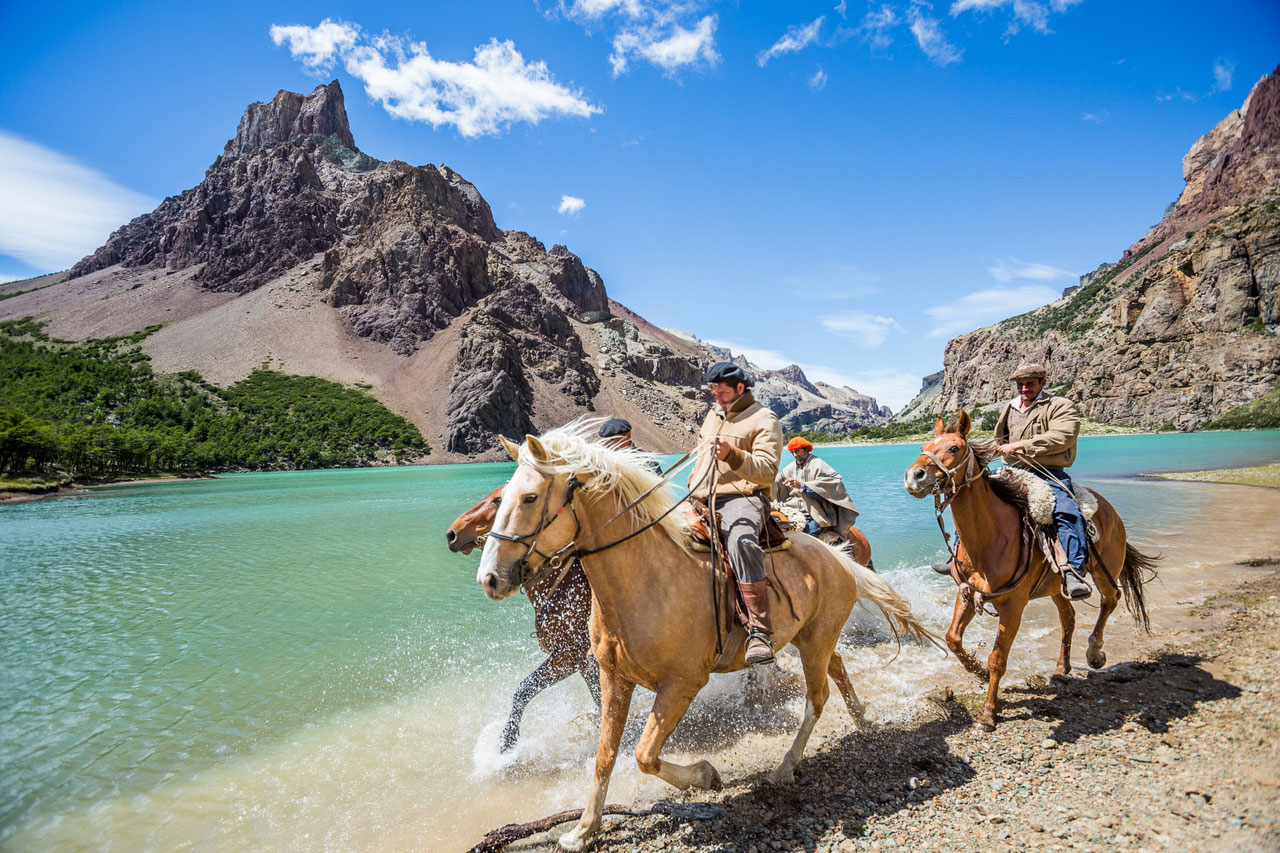
A thorough course briefing will be delivered with up to date information on terrain, hazards, likely weather conditions, expected speeds and routes, emergency access and evacuation routes, likely response times, and the expected flow and sequence of the race.
There will be a full gear test and a riding test, allowing the riders to get acquainted with both of their horses, and select which one they will start on, so that their second horse can be transferred to checkpoint 3 in advance of the launch.
There will be a tech practice run, with live tracking, a simulated SOS response and explanation of what to do in emergency situations.
There will be a navigation practice run, to ensure all devices are set up correctly and reporting faithfully.
The saddle bags provided to the riders will be available, and help loading the horses optimally and attaching key equipment so that it is secure PRE-RACE TRAINING yet accessible, in advance of the race launch.
The scales will be freely available so that riders can perfect their packing for the launch, and decide what to send ahead to the remote checkpoints, 3/5/7, in their dry sacs.
There will be a practice camp out, with the horses (not necessarily overnight), to show techniques for securing and caring for your horses out in the field.
There will be veterinary briefings to explain the vet checks, what is expected, and how best to look after the horses between checkpoints, as well as be as successful and efficient as possible through the checkpoints. What to do in various scenarios if your horse is injured or in trouble will be discussed at length, and what help and support you can expect from the horse care team.
There will be medical briefings explaining the importance of proactive self-care in the field, and what to do if a condition goes from managed to acute. They will also cover the “what happens next” in the case of a serious rider injury
Rider selection, horse selection – The draft
The Pass of Tears is a richer event thanks to the unique way it attracts its athletes, equine and human.
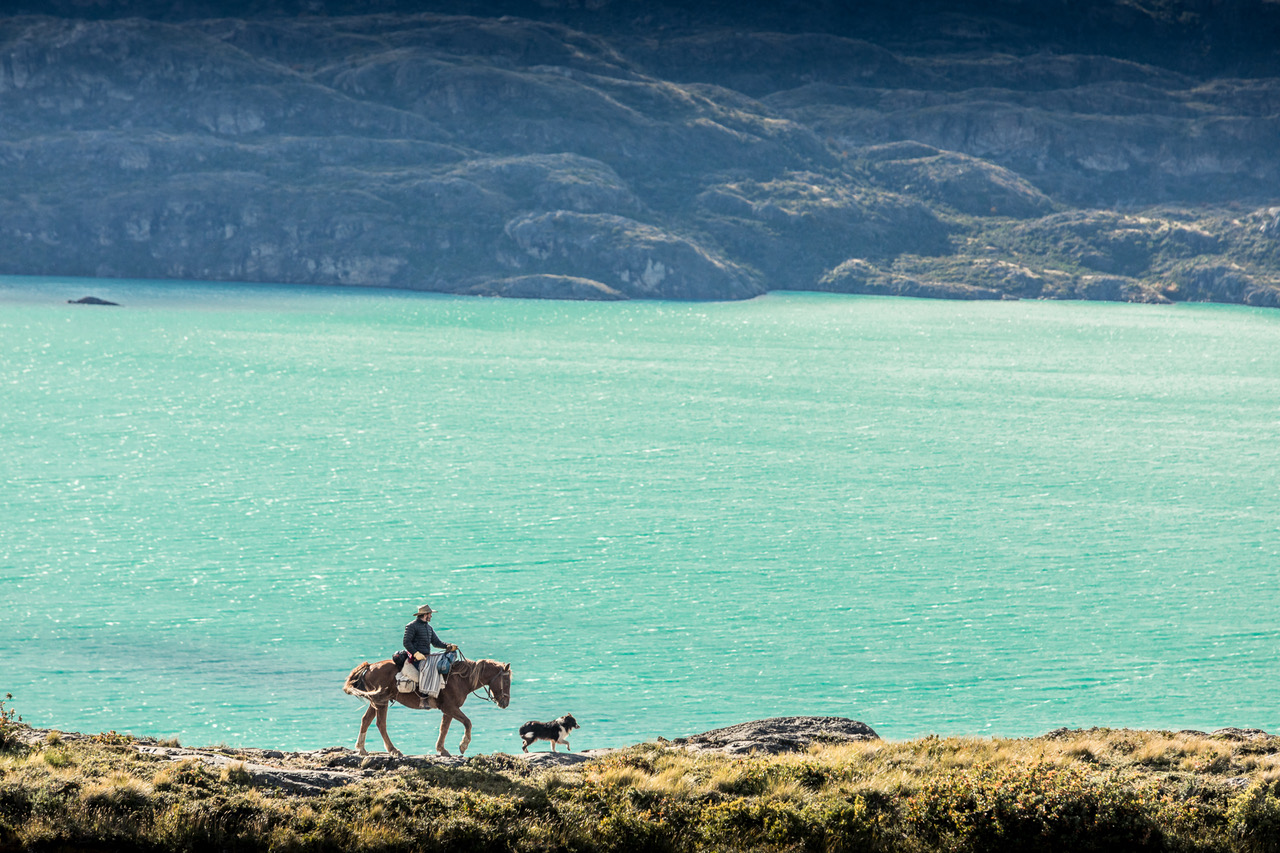
Riders are accepted onto the event based on their credentials as equestrians and outdoorsmen, and they pay to compete.
Horses are put forward for the event by local owners proud to see their horses compete and represent them in a prestigious competition, with a lucrative prize pot. Owners must provide pairs of horses so that their jockey only rides for them. Owners can supply horses to multiple jockeys, and if there are any team entries, all four horses in the team will come from a single owner.
Once accepted, riders have the opportunity to advertise their abilities as a pilot and partner to the panel of owners.
At this point, it will be the owners who go into a draw. The first to be drawn has the choice of jockeys for his horses.
Once all owners have selected their riders, those riders will in turn select which of the owners’ horses they will ride. For example an owner offering ten horses to five riders; the first rider he or she selects to his team has the choice of two horses from all 10. The second rider in his team can select 2 from 8, and so on.
We expect this mutual selection to be a fun and engaging session, where track record, but also personality, size and riding style, and that certain chutzpah that tells an owner “I am here to win this for you” will carry the day.
Providing your own horses
It is possible to bring your own horse to race.
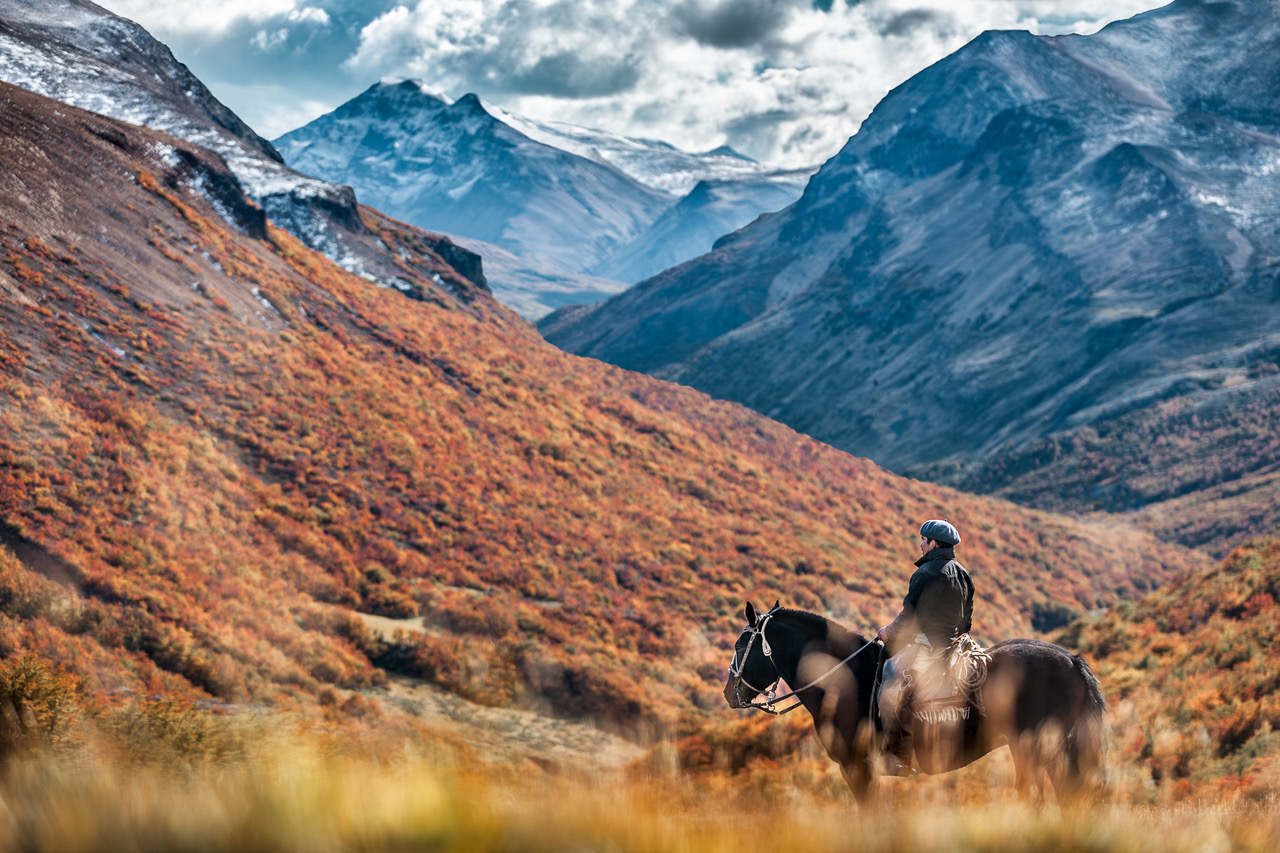
Riders are accepted onto the event based on their credentials as equestrians and outdoorsmen, and they pay to compete.
Horses are put forward for the event by local owners proud to see their horses compete and represent them in a prestigious competition, with a lucrative prize pot. Owners must provide pairs of horses so that their jockey only rides for them. Owners can supply horses to multiple jockeys, and if there are any team entries, all four horses in the team will come from a single owner.
Once accepted, riders have the opportunity to advertise their abilities as a pilot and partner to the panel of owners.
If you have the means of securing your own mounts for the event, we have no objection; however, you will be totally responsible for their transport to and from the event.
If you provide your own horses, you will be welcome to use your own tack. All horses will be subject to the same veterinary checks and standards as any other entered in the competition.